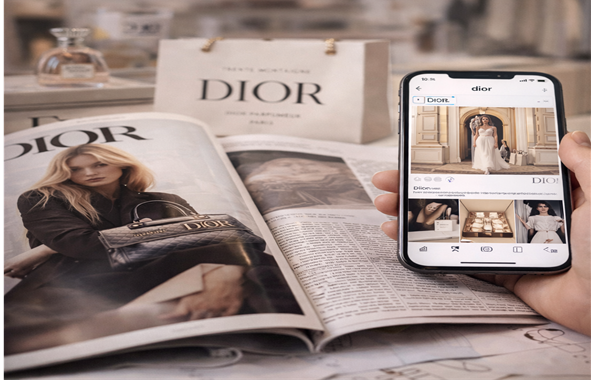
Traditional vs Digital Media: How Dior Uses Both to Build Timeless Luxury
In the world of fashion, a brand’s presence is shaped through stories, experiences and meaningful customer connections across multiple touchpoints. At the heart of these connections lies media: the channels brands use to reach, engage and persuade audiences. While traditional media once stood alone as the dominant route to consumers, the rise of digital media has redefined what is possible. Rather than being opposites, the two function as complementary tools when used strategically.
Digital media differs from traditional media in several key ways. It is interactive, measurable and highly personal. Unlike a print advertisement or a broadcast spot, digital channels invite audiences to engage, to click, comment, share, explore and act. Digital platforms also allow brands to tailor content to individual users based on behavior, preferences and data insights, delivering relevant experiences at scale. In contrast, traditional media such as print, television or outdoor advertising reaches broad audiences simultaneously, building mass awareness and reinforcing brand identity in ways that feel tangible, authoritative and enduring.
Dior is a clear example of how a luxury brand successfully uses both media types to reinforce its heritage while remaining culturally relevant. As a historic luxury house, Dior continues to invest in carefully curated traditional media, from glossy magazine spreads to high-impact runway broadcasts. These platforms convey prestige, craftsmanship and cultural significance in a way digital media alone cannot replicate. A billboard on the Champs-Élysées or a feature in Vogue signals legitimacy and timeless appeal, associating the brand with art, culture and aspiration.
At the same time, Dior has fully embraced digital media to extend these traditional messages into interactive and measurable experiences. On platforms such as Instagram and TikTok, the brand shares behind-the-scenes content, fashion film shorts and lifestyle storytelling that invites global audiences to participate rather than simply observe. Influencer partnerships, campaign collaborations and unboxing content help humanize the brand, showing products in real-life contexts while reinforcing trust and aspiration. Digital campaigns also allow Dior to collect real-time data, test creative elements and optimize engagement, while e-commerce and personalization tools drive direct conversion opportunities that traditional media rarely captures on its own.
This strategic integration reflects what industry experts observe about media in the digital age. As Forbes notes, “Just as you should never run your social media and PPC marketing completely independently of each other, your digital and traditional marketing need to work together and complement each other” (Forbes Business Council, 2023). In Dior’s case, digital media does not replace traditional channels, it amplifies them, creating a continuous loop between broad cultural relevance and targeted audience interaction.